Journal ·
How to Tell Real Amber from Imitations: 5 Simple Checks
Five simple at-home checks that can help you spot likely imitations — and why a laboratory certificate still matters most.
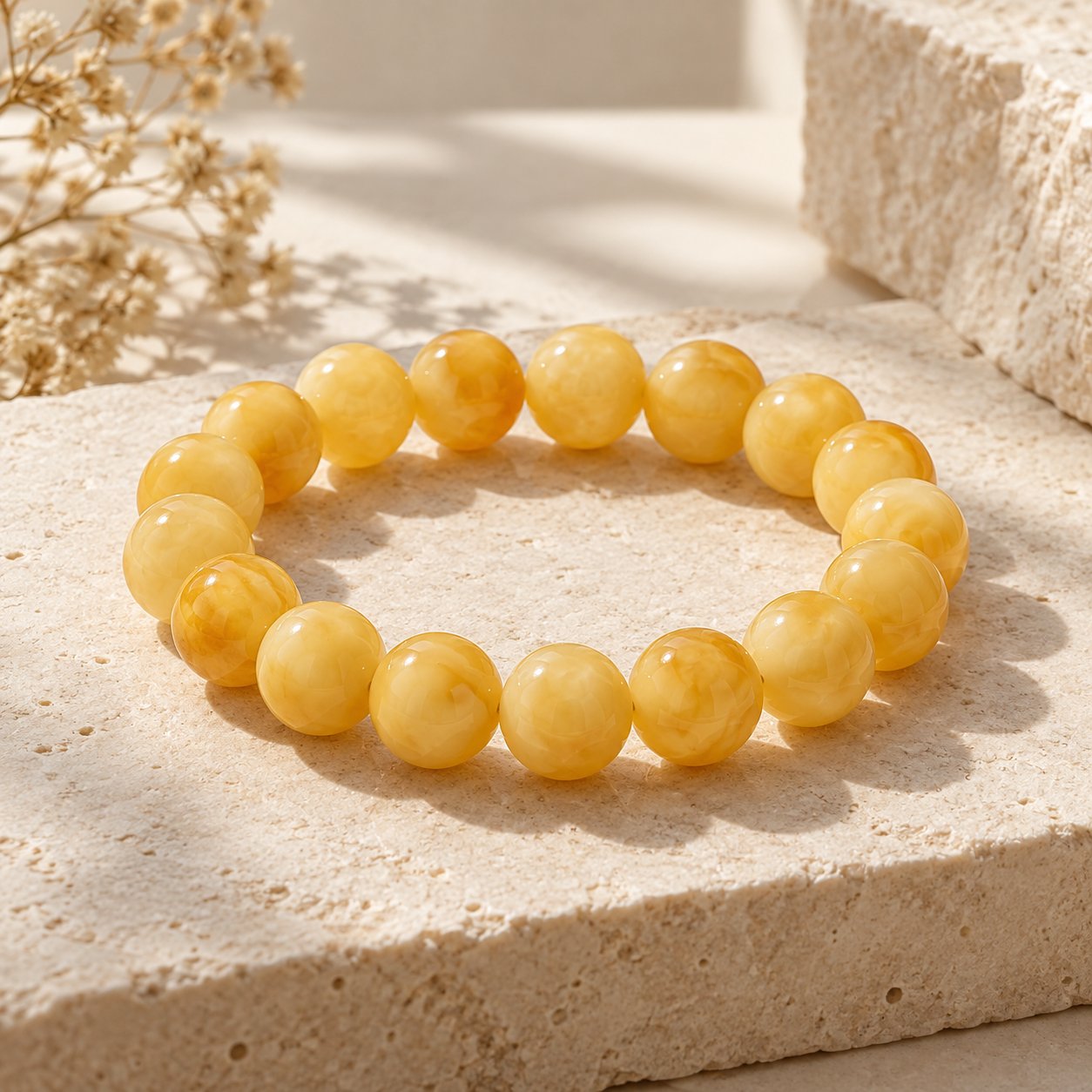
Amber looks warm and inviting, but so do many imitations. No single home test can prove what a piece is made of, so it helps to combine several gentle checks — and to treat a laboratory certificate as the final word.
1. The Saltwater Float Test
Real amber is light. In a glass of warm water with enough salt dissolved to make it dense, many genuine amber pieces will float or hover, while heavier glass and some plastics sink. Use lukewarm water, be gentle, and dry the piece afterwards. A result that looks unusual is a reason to ask questions, not a verdict on its own.
2. Warmth and Touch
Amber usually feels warm to the touch and light in the hand, unlike glass, which often feels cool and heavy. Rubbing a piece gently can also build a small static charge, so it may attract tiny bits of paper. These clues are helpful, but they vary with size, setting, and temperature.
3. Fluorescence and Smell
Under ultraviolet light, many natural amber pieces glow a soft blue-green, while some imitations glow differently or not at all. If a piece is warmed very gently, real amber may give off a faint pine-like scent, whereas plastic often smells sharp or chemical. Never burn a piece or use a flame test at home; it can damage the amber and is unsafe.
4. Look, and Check the Certificate
Finally, look closely at the piece and its paperwork. Natural amber often shows small internal features and a depth that moulded copies lack, but appearance alone is easy to copy. Check that the certificate matches the piece, and use the verification website printed on your certificate card to confirm the certificate number. Home methods are only for reference; when it matters, rely on the laboratory certificate.